
Lightweight Business Websites with Quick.CMS
Quick.CMS for simple and stable business websites
Quick.CMS is a lightweight content management system that stores data in files instead of a traditional SQL database. It works well for simpler business websites that do not need an extensive backend or many integrations.
In a well-matched project, it helps keep server requirements low, administration simple and the code structure clear.
Browse Selected Projects
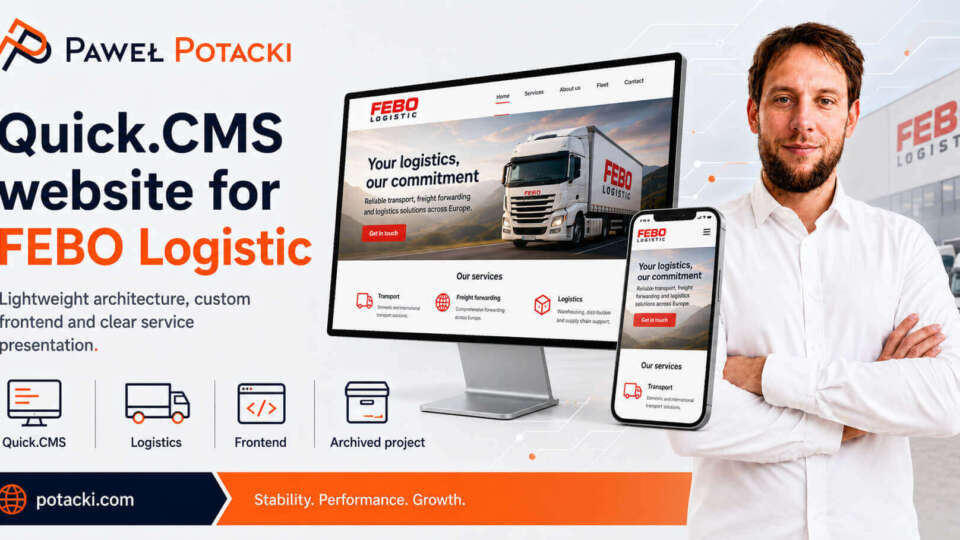
Quick.CMS Website for FEBO Logistic
- Quick.CMS
Archived Quick.CMS website for FEBO Logistic with a lightweight structure, full-screen navigation and custom JavaScript elements.
Tell Me About Your Project
What You Can Expect When Working with Me
A good project starts with understanding the real problem. Before I write any code, I review the requirements, look at the current setup and suggest an approach that makes sense for the business, the budget and the expected scale.
Security and stability from the beginning
I think about data protection, maintainability and failure prevention before development starts. These are part of the architecture, not fixes added later.
Performance matched to the project
I optimize the code, database and server environment according to the way the system will actually be used. This includes everyday traffic, seasonal demand and predictable spikes during campaigns or product launches.
Clear communication
I explain the technical decisions in plain language. You know what is being built, why a particular solution was chosen and what alternatives were considered.
How We Work Together
I do not treat projects as an assembly line. I work on a limited number of implementations at a time so I can stay involved in the details and make sensible technical decisions throughout the process.
1. Initial Review
You describe the project, the current problem or the planned changes. I review the requirements and usually reply within 24 hours with initial feedback, follow-up questions and an estimated scope of work.
2. Architecture and Scope
Before development starts, we define the scope and select the right tools. Depending on the project, this may include WordPress, WooCommerce, Craft CMS, PrestaShop, custom PHP development, external integrations or Linux server configuration.
3. Development and Deployment
I handle the implementation, testing, deployment and performance tuning. After launch, I can also take care of updates, monitoring, further development and server maintenance when ongoing support is needed.